
More Information
Submitted: July 27, 2026 | Accepted: July 31, 2026 | Published: August 03, 2026
Citation: Yano H, Wall NR, Langridge WHR Dendritic Cell-Derived IL-6: An Instructional Regulator of Adaptive Immunity- Current Concepts and Emerging Perspectives. J Clin Intensive Care Med. 2026; 11(1): 18-24. Available from:
https://dx.doi.org/10.29328/journal.jcicm.1001059
DOI: 10.29328/journal.jcicm.1001059
Copyright license: © 2026 Yano H, et al. This is an open access article distributed under the Creative Commons Attribution License, which permits unrestricted use, distribution, and reproduction in any medium, provided the original work is properly cited.
Keywords: Dendritic cells; IL-6; immune polarization; T cell differentiation; Th17/Treg

Dendritic Cell-Derived IL-6: An Instructional Regulator of Adaptive Immunity- Current Concepts and Emerging Perspectives
Hiroshi Yano1, Nathan R Wall2* and William HR Langridge3*
1University of Redlands, Department of Biology, Redlands, CA, 92374, USA
2Center for Radiation Medicine, Loma Linda School of Medicine, USA
3Loma Linda University, School of Medicine, Center for Health Disparities and Molecular Medicine, Loma Linda, CA, 92354, USA
*Corresponding author: William HR Langridge, Rm. 161 Mortensen Hall, Center for Health Disparities, Loma Linda University, Loma Linda, CA, 92354, USA, Email: [email protected]
Dr. Nathan Wall, Center for Radiation Medicine, Loma Linda School of Medicine, Email: [email protected]
The human immune system maintains homeostasis through a tightly regulated balance between protective immunity and immunological tolerance, a process critically governed by dendritic cells (DCs) [1]. As professional antigen-presenting cells, DCs function as central integrators of environmental and pathogenic signals, translating these inputs into cytokine programs that orchestrate communication across leukocyte networks [2]. The composition of this DC-derived cytokine milieu is a primary determinant of immune outcome, directing responses toward effective host defense or, when dysregulated, toward pathological inflammation. Within this regulatory framework, interleukin-6 (IL-6) has emerged as a pivotal signaling molecule linking innate immune activation to adaptive T-cell polarization, shaping the balance between effector and regulatory responses and contributing to inflammatory disease processes [3,4]. This broader view of dendritic cell function suggests that immune outcomes are determined not solely by antigen recognition, but by the integration of antigenic information with cytokine signals, tissue-derived cues, and inflammatory context. Figure 1 illustrates this conceptual framework, highlighting how dendritic cells interpret multiple layers of information to shape adaptive immune responses.
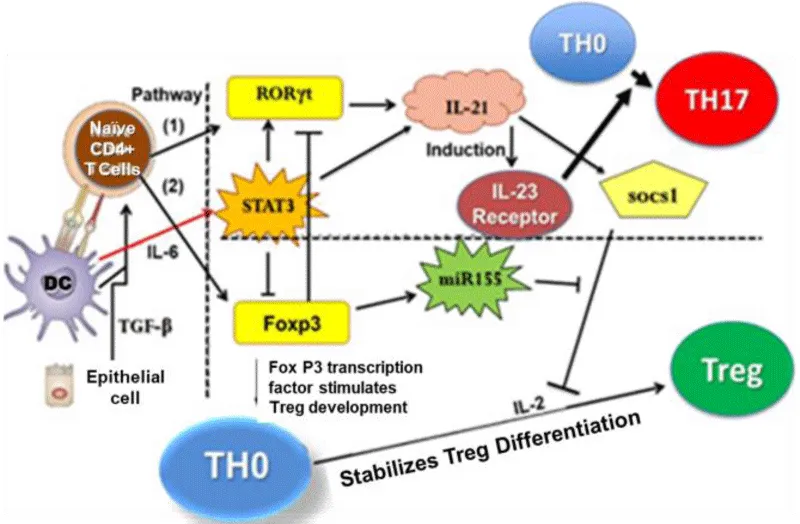
Figure 1: Dendritic cells coordinate leukocyte networks controlling autoimmune β-cell destruction or immune tolerance. DCs integrate environmental cues and present antigens to naïve CD4+ T cells (Th0), directing differentiation toward pro-inflammatory Th1/Th17 or regulatory T cells (Treg). Th1/Th17 differentiation is driven by DC-derived IL-6, IL-12, and IL-23, activating STAT1/STAT3 pathways and promoting macrophage (MΦ) and cytotoxic T lymphocyte (CTL)-mediated β-cell destruction. In contrast, DCs producing IL-10, TGF-β, and IL-2 induce FoxP3 in Tregs, suppress inflammatory signaling, and protect β-cells. Black arrows indicate activation; inhibitory lines indicate suppression. Modified from Wilson et al., Nature Immunology. 2007;8(9):950–957.
Importantly, the biological effects of IL-6 are not uniformly associated with inflammation. Although IL-6 contributes to pathogenic Th17 responses in autoimmune settings, IL-6 signaling also supports protective immune functions, including acute-phase responses, antimicrobial defense, antibody production, antiviral immunity, tissue regeneration, and restoration of immune homeostasis following infection or injury [3,5,6]. The apparent duality of IL-6 reflects differences in signaling context rather than contradictory biological roles. Classical IL-6 signaling through membrane-bound IL-6 receptors can promote physiological and regenerative responses, whereas prolonged IL-6 trans-signaling through soluble IL-6 receptor pathways has been strongly associated with chronic inflammatory pathology [7,16]. Consequently, understanding IL-6 biology requires consideration of cellular source, timing, receptor engagement, and tissue environment rather than categorization of IL-6 as exclusively inflammatory.
Mechanistically, IL-6 influences naïve CD4⁺ T-cell differentiation by activating STAT3-dependent transcriptional programs. In the presence of transforming growth factor-β (TGF-β), IL-6 promotes expression of RORγt and supports Th17 differentiation while limiting FoxP3-dependent regulatory T-cell (Treg) development [8–11,17]. Because DCs represent an important source of IL-6 during immune activation, modulation of DC-derived IL-6 provides a potential strategy for altering downstream T-cell fate decisions and immune network behavior [13–15].
Additional experimental studies demonstrate that targeted modulation of IL-6 production in DCs can alter cytokine hierarchies, reducing inflammatory Th17-promoting signals while enhancing regulatory pathways without necessarily eliminating fundamental DC maturation programs or antigen-presenting capacity [13–15,21]. This distinction provides an important conceptual framework for understanding how DC cytokine output may influence adaptive immunity independently of classical pattern-recognition receptor-driven maturation pathways.
In this review, we examine IL-6 as a central regulatory molecule within DC cytokine networks, integrating evidence from published studies to define how selective modulation of IL-6 may reshape immune polarization and influence adaptive immune outcomes. Although IL-6 is widely recognized as a systemic mediator involved in inflammation and is an established therapeutic target in inflammatory disorders [4,7], the specific contribution of dendritic cell-derived IL-6 as an instructional signal controlling adaptive immune interpretation remains less clearly defined.
We discuss the mechanisms through which IL-6 produced by dendritic cells influences T-cell differentiation, particularly the balance between inflammatory Th17 responses and regulatory T-cell development. Rather than functioning solely as an inflammatory mediator, DC-derived IL-6 is considered here as a context-dependent cytokine signal whose biological consequences depend on integration with antigen presentation, co-stimulatory signaling, tissue-derived cues, and the temporal characteristics of immune activation.
The extent to which IL-6 regulates cytokine signals directing T-cell differentiation independently of canonical dendritic cell maturation pathways remains an important unresolved question [13–15,27,28]. This distinction is particularly relevant because therapeutic approaches that broadly suppress IL-6 signaling may interfere with protective immune functions, including antimicrobial defense and antiviral antibody responses, whereas selective modulation of DC-derived IL-6 could potentially recalibrate immune polarization while preserving essential immune competence [5,6].
Recent studies further emphasize that IL-6 biology cannot be interpreted independently of cellular source and inflammatory context. Persistent IL-6 activity within autoimmune tissues can promote pathogenic Th17 responses and chronic inflammation, whereas transient IL-6 production during infection contributes to effective host defense and immune restoration [6,7,29]. These observations support a model in which IL-6 functions as an immune “instructional” cytokine, providing contextual information that influences adaptive immune fate decisions rather than simply amplifying inflammation.
Here, we integrate mechanistic studies and emerging therapeutic concepts to define the role of DC-derived IL-6 in immune polarization and homeostasis. Resolving how IL-6 production by dendritic cells influences adaptive immunity is critical for determining whether selective modulation of this pathway can reduce pathological inflammatory responses while preserving antigen presentation, immune surveillance, and protective host responses.
Current understanding of dendritic cell-derived IL-6 signaling
Dendritic cells regulate the balance between inflammatory and regulatory immune responses through cytokine networks that influence downstream T-cell differentiation. Among these mediators, IL-6 functions as a central signaling node linking innate immune activation to adaptive immune polarization. However, the consequences of IL-6 production by DCs are highly context-dependent and influenced by the maturation state of the DC, inflammatory environment, receptor availability, and duration of cytokine exposure [3,7,13–15].
This context dependence is particularly important because IL-6 produced during transient immune activation may contribute to protective adaptive responses, whereas persistent or dysregulated IL-6 production within inflammatory environments can reinforce pathogenic immune circuits. Thus, the biological outcome of DC-derived IL-6 is determined not simply by cytokine abundance, but by how IL-6 signaling is integrated with surrounding cellular and molecular networks.
DCs rapidly produce IL-6 following stimulation with inflammatory cues, including Toll-like receptor (TLR) ligands such as lipopolysaccharide (LPS), contributing to the cytokine environment that guides T-cell fate decisions [15,27,28]. However, IL-6 production should be distinguished from classical DC maturation, because cytokine output and antigen-presenting capacity represent partially separable regulatory processes.
IL-6-dependent orogramming of Th17 and regulatory T cells
IL-6 activates the Janus kinase (JAK)-STAT pathway, resulting in STAT3 phosphorylation and nuclear translocation, a critical step in programming CD4⁺ T cells toward inflammatory lineages [8–11]. Activated STAT3 promotes expression of RORγt, the lineage-defining transcription factor for Th17 cells, thereby supporting Th17 differentiation while opposing FoxP3 induction required for regulatory T-cell development [10,11,17]. Through this reciprocal regulation of transcriptional programs, IL-6 functions as a determinant of T-cell fate by shifting the balance between inflammatory Th17 responses and regulatory T-cell differentiation. Importantly, this effect is not an intrinsic property of IL-6 alone, but reflects integration with additional cytokine signals, including TGF-β, IL-21, IL-23, and the inflammatory context in which T-cell activation occurs [9–11,17]. IL-6 can inhibit TGF-β-mediated FoxP3 induction and cooperate with IL-23 signaling to stabilize pathogenic Th17 responses [10,11,18,20]. These integrated signaling pathways position IL-6 as an important regulator of both initiation and maintenance of inflammatory T-cell polarization. Recent studies examining Th17 biology further emphasize that inflammatory T-cell responses exist along a continuum of functional states rather than representing fixed developmental endpoints. The pathogenic potential of Th17 cells depends on the cytokine environment, tissue context, and persistence of inflammatory signaling [29,40]. The interactions between dendritic cell-derived IL-6, T-cell differentiation, and downstream effector mechanisms can be integrated into a conceptual framework illustrating how changes in the cytokine environment influence the balance between inflammatory and regulatory immune responses (Figure 2).
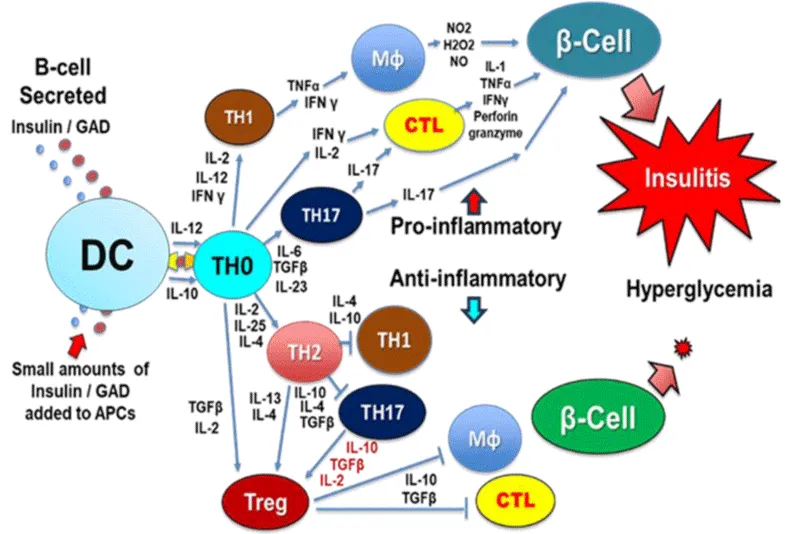
Figure 2: Proposed model of IL-6 dependent dendritic cell regulation of immune polarization. Created by the authors, this schematic illustrates how dendritic cell-derived IL-6, together with other cytokine signals, influences CD4+ T-cell differentiation and immune outcome. An inflammatory cytokine environment promotes Th1/Th17-associated responses leading to macrophage (MΦ) and cytotoxic T lymphocyte (CTL)-mediated β-cell injury (upper pathway), whereas a regulatory cytokine environment favors Th2/Treg responses, suppresses inflammatory effector mechanisms, and preserves β-cell integrity (lower pathway).
IL-6 functions beyond the Th17/Treg axis
Nevertheless, IL-6-dependent immune regulation cannot be interpreted solely through the Th17/Treg framework. Several studies demonstrate that IL-6 contributes to essential physiological immune functions, including B-cell differentiation, antibody responses, antiviral defense, acute-phase responses, and tissue repair [3,5,6].
These observations resolve an apparent paradox in IL-6 biology: the same cytokine that contributes to chronic inflammatory disease can also support effective host protection. The opposing outcomes of IL-6 signaling reflect differences in timing, cellular source, receptor engagement, and inflammatory context rather than contradictory biological functions.
Persistent IL-6 signaling, particularly through trans-signaling pathways, can sustain STAT3 activation, promote pathogenic Th17 differentiation, and contribute to autoimmune tissue injury [7,29,30]. In contrast, transient IL-6 responses during infection may support protective immune activation and subsequent restoration of immune balance [5,6].
Selective modulation of DC-derived IL-6
Further evidence suggests that targeted modulation of IL-6 in dendritic cells can recalibrate cytokine networks, limiting Th17-promoting signals while enhancing regulatory pathways without broadly disrupting DC maturation or antigen-presenting functions [13–15,21].
This observation provides an important mechanistic distinction: DC-derived IL-6 represents an adjustable cytokine instruction signal rather than an obligatory component of DC activation. Therefore, selective manipulation of IL-6 production may alter adaptive immune polarization while preserving essential innate immune functions.
IL-6-dependent cytokine networks in dendritic cells
IL-6 integrates signals within DC-centered cytokine networks, coordinating both innate and adaptive immune outcomes. Importantly, these effects are not determined by IL-6 expression alone. The same cytokine can generate distinct biological outcomes depending on receptor availability, downstream signaling pathways, cellular targets, and the temporal characteristics of exposure [3,7].
Accordingly, IL-6 should be considered an instructional cytokine whose biological consequences emerge from interactions among cytokine networks, antigen-presenting cells, responding lymphocytes, and tissue-specific inflammatory environments.
For example, IL-6 contributes to protective immune responses during acute infection, whereas sustained IL-6 production within autoimmune tissues can reinforce inflammatory circuits through prolonged STAT3 activation and maintenance of pathogenic Th17 responses [5–7].
By promoting Th17 differentiation and limiting regulatory T-cell expansion, IL-6 influences the balance between inflammatory and tolerogenic immune states during autoimmune responses [9,10,18–20]. This balance is particularly relevant in chronic inflammatory disorders, where persistent IL-6 signaling may stabilize autoreactive T-cell populations and promote immune-mediated tissue injury.
Illustrative observations consistent with published studies
Accumulating evidence identifies IL-6 as an important component of the cytokine network regulating dendritic cell activation and inflammatory programming [13–15]. Consistent with this concept, representative RT-PCR analysis from the authors’ laboratory demonstrates suppression of IL-6 transcripts following anti-IL-6 siRNA treatment while maintaining β-actin expression as a control for RNA integrity and amplification normalization (Figure 3). These observations are presented solely as an illustrative example of IL-6 transcript modulation and are not intended to independently establish altered dendritic cell phenotype, cytokine network reprogramming, or downstream effects on T-cell differentiation. Rather, they provide experimental context consistent with published studies demonstrating that IL-6 availability influences dendritic cell-associated immune signaling pathways.
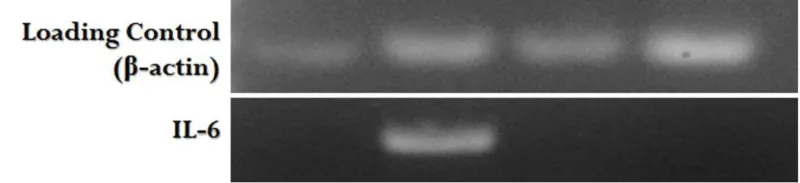
Figure 3: Representative analysis of IL‑6 transcript modulation in dendritic cells following anti‑IL‑6 siRNA treatment. RT‑PCR analysis from the authors’ laboratory demonstrates reduced IL‑6 mRNA expression following anti‑IL‑6 siRNA treatment, with β‑actin serving as a control for RNA integrity and amplification normalization. While these data provide an illustrative example of IL‑6 transcript modulation consistent with published studies they are not intended to independently establish changes in dendritic cell phenotype, maturation, or downstream T‑cell responses.
Published studies have demonstrated that alteration of IL-6 signaling can influence the balance between inflammatory and regulatory immune responses, including modulation of Th17-associated pathways and regulatory T-cell induction [15,42]. Together, these findings support the broader concept that selective regulation of DC-derived IL-6 may alter the instructional cytokine environment encountered by responding lymphocytes while preserving fundamental antigen-presenting functions. Figure 4 presents a conceptual model constructed by the authors that integrates published evidence and experimental observations to illustrate how dendritic cell-derived IL-6 functions as an instructional cytokine, shaping the balance between inflammatory and regulatory immune pathways. The model emphasizes that IL-6-dependent immune outcomes are determined by cellular source, signaling context, and integration with antigen presentation, co-stimulatory signals, and tissue-derived cues.
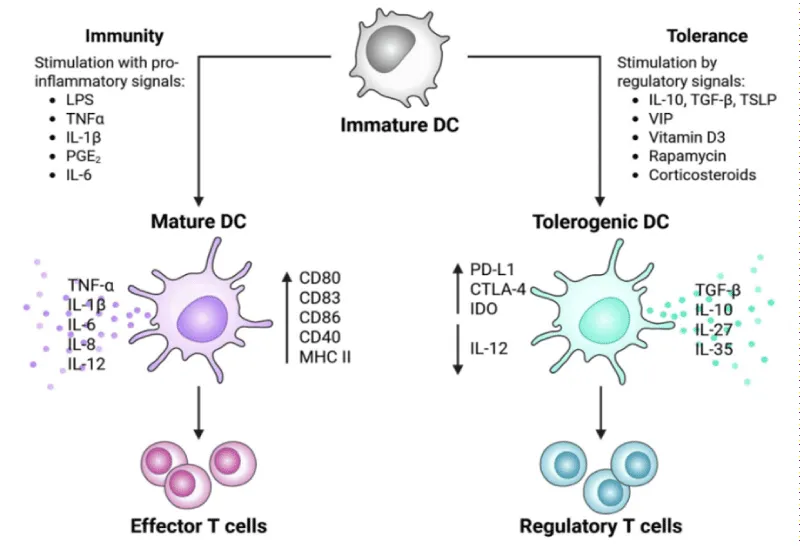
Figure 4: Conceptual model of dendritic cell derived IL‑6 regulation of immune polarization. This figure was constructed by the authors to illustrate how DC derived IL‑6 integrates with antigen presentation, co‑stimulatory signals, and inflammatory cues to influence the balance between Th17 associated inflammatory responses and regulatory immune pathways. The model emphasizes that IL‑6‑mediated outcomes are determined by cellular source, signaling context, and the surrounding immune environment.
The literature reviewed here supports the concept that dendritic cell-derived IL-6 represents an important instructional component of adaptive immune regulation. Unlike classical maturation signals initiated through pattern-recognition receptors, IL-6 modifies the qualitative cytokine environment that influences subsequent T-cell differentiation [13–15,27,28].
This distinction provides a broader interpretation of dendritic cell function: antigen presentation alone does not determine immune outcome. Rather, DCs integrate antigenic information with cytokine-derived signals, tissue-derived cues, and inflammatory context to instruct adaptive immune responses. Within this framework, DC-derived IL-6 represents one component of the molecular information network that shapes immune polarization.
Importantly, IL-6 biology is context-dependent. While excessive or persistent IL-6 production contributes to pathogenic Th17 responses and chronic inflammatory disease, IL-6 also supports protective immune functions, including antimicrobial defense, antiviral antibody responses, tissue repair, and restoration of immune balance following infection [3,5–7].
Therefore, the biological significance of IL-6 cannot be defined solely by whether it is associated with inflammation. Instead, IL-6 functions as a context-dependent regulator whose effects depend on cellular source, receptor engagement, signaling pathway, timing, and the surrounding immune environment [3,7,29].
Selective modulation of DC-derived IL-6 may provide an opportunity to recalibrate immune polarization without broadly suppressing immune competence. This approach differs fundamentally from systemic cytokine blockade because it seeks to modify the instructional signals generated by specific immune cell populations while preserving beneficial IL-6-dependent physiological functions [5,6,13–15].
Cytokine instruction versus dendritic cell maturation
A central implication of the studies discussed in this review is the potential separation between cytokine-mediated immune instruction and pattern-recognition receptor-driven dendritic cell maturation.
Maturation triggered by Toll-like receptor (TLR) ligands, such as LPS, proceeds through MyD88-dependent NF-κB and MAPK signaling pathways, resulting in increased expression of co-stimulatory molecules and enhanced antigen-presenting capacity [27,28]. In contrast, IL-6 influences the cytokine environment that regulates adaptive immune interpretation [13–15].
This distinction suggests that dendritic cells possess multiple regulatory layers: one controlling antigen presentation and activation state, and another controlling the qualitative cytokine information delivered to responding lymphocytes. Modulation of IL-6 may therefore alter immune polarization without necessarily eliminating the ability of DCs to initiate antigen-specific responses.
IL-6-dependent STAT3 activation promotes RORγt expression and stabilization of Th17-associated transcriptional programs while limiting FoxP3-dependent regulatory T-cell differentiation [8–12,17]. Reduction of IL-6 signaling may interrupt this inflammatory circuit and permit regulatory pathways involving IL-10 and TGF-β to become more prominent [21–23].
Therapeutic implications
The translational implications of selective IL-6 modulation are significant. Although systemic IL-6 blockade has demonstrated efficacy in autoimmune and inflammatory disorders, broad inhibition may compromise protective immune functions, including host defense against infection [5,6,24–26].
IL-6-targeted strategies continue to demonstrate relevance across inflammatory disorders, including autoimmune and mucosal inflammatory diseases [26,35].
In contrast, targeting IL-6 production or signaling within defined immune compartments, such as dendritic cells, may provide a more precise approach by selectively modifying pathological immune instruction while preserving essential protective responses.
This strategy represents a potential refinement of existing IL-6-directed therapies by shifting from generalized cytokine inhibition toward selective modulation of the cellular sources and contexts responsible for pathogenic immune instruction.
This strategy may have relevance across multiple disease settings. In autoimmune disease, selective modulation of DC-derived IL-6 could reduce inflammatory Th17-driven responses while promoting regulatory pathways. In vaccination, particularly at mucosal surfaces, controlled regulation of inflammatory cytokine environments may improve the balance between protective immunity and tissue preservation [34].
More broadly, the concept that DC-derived cytokines provide instructional information extends beyond IL-6 and may represent a general framework for understanding how antigen-presenting cells translate environmental signals into adaptive immune decisions.
Future perspectives
Future studies should investigate DC-specific IL-6 regulation in vivo and define how modulation of this pathway influences cytokine networks, T-cell differentiation, and long-term immune homeostasis.
Important areas for future investigation include determining how DC-derived IL-6 differs functionally from IL-6 produced by other cellular sources, defining the temporal requirements for IL-6-mediated instruction, and establishing whether selective modulation of DC-derived IL-6 can provide therapeutic benefit without compromising protective immunity.
Recent studies further emphasize that IL-6-dependent immune outcomes are determined by cellular source, signaling context, and inflammatory environment rather than cytokine abundance alone [38–40].
Emerging approaches using dendritic cell-targeted delivery systems may provide opportunities for selective immune modulation while preserving broader immune competence [31–33].
DC-derived extracellular vesicles, including exosomes, may represent an additional mechanism by which IL-6-dependent signals are transmitted between immune cells [36,37]. Understanding how extracellular vesicle-associated cytokine communication contributes to immune instruction may provide additional opportunities for targeted immunomodulation.
Collectively, the evidence reviewed here and the authors’ complementary observations support the concept that dendritic cell-derived IL-6 functions as a central regulatory node controlling immune polarization and homeostasis.
Dendritic cell (DC)-derived IL-6 represents a context-dependent regulatory node linking innate immune activation with adaptive T-cell programming. Rather than functioning solely as a pro-inflammatory mediator, IL-6 provides instructional information that influences immune polarization according to cellular source, receptor engagement, signaling pathway, timing, and inflammatory environment.
Evidence from published studies, together with complementary observations presented in this review, indicates that modulation of DC-derived IL-6 can reshape cytokine networks, shifting immune responses away from excessive Th17-associated inflammation while preserving fundamental dendritic cell functions, including antigen presentation and responsiveness to innate stimuli [6,13–15,27].
Mechanistically, these effects reflect the ability of IL-6 to regulate STAT3-dependent transcriptional programs that promote RORγt expression and Th17 differentiation while limiting FoxP3-dependent regulatory T-cell development [8–12,17]. However, the biological consequences of IL-6 signaling are not determined solely by this pathway and must be interpreted within the broader cellular and tissue context in which signaling occurs.
These findings provide a framework for understanding how cytokine-mediated immune instruction differs from pattern-recognition receptor-driven dendritic cell maturation. Whereas maturation determines the capacity of DCs to present antigen and provide co-stimulatory signals, IL-6 contributes qualitative information that influences how responding lymphocytes interpret antigenic stimulation.
This distinction has important therapeutic implications. While systemic IL-6 inhibition can reduce pathological inflammation, it may also interfere with beneficial immune functions, including antimicrobial defense and protective antibody responses [5,6,24–26]. Selective modulation of DC-derived IL-6 therefore represents a potential strategy to alter pathological immune polarization while maintaining essential host defense mechanisms.
Future studies should define the cellular specificity, temporal requirements, and in vivo consequences of DC-targeted IL-6 regulation. Determining how dendritic cell-derived IL-6 integrates with tissue signals, extracellular vesicle-mediated communication, and other cytokine networks will be essential for translating this concept into therapeutic approaches for autoimmune disease, inflammatory disorders, and vaccine development.
Overall, DC-derived IL-6 can be viewed not simply as an inflammatory output, but as an immune instructional signal that contributes to the interpretation of antigenic information and the balance between protective immunity and immune-mediated pathology.
- Steinman RM. Dendritic cells: understanding immunogenicity. European Journal of Immunology. 2007;37(Suppl 1):S53–S60. Available from: https://dx.doi.org/10.1002/eji.200737400.
- Banchereau J, Steinman RM. Dendritic cells and the control of immunity. Nature. 1998;392(6673):245–252. Available from: https://dx.doi.org/10.1038/32588.
- Tanaka T, Narazaki M, Kishimoto T. IL-6 in inflammation, immunity, and disease. Cold Spring Harbor Perspectives in Biology. 2014;6(10):a016295. Available from: https://dx.doi.org/10.1101/cshperspect.a016295.
- Kang S, Tanaka T, Narazaki M, Kishimoto T. Targeting interleukin-6 signaling in clinic. Immunity. 2019;50(4):1007–1023. Available from: https://dx.doi.org/10.1016/j.immuni.2019.03.026.
- Rose-John S, Winthrop K, Calabrese L. The role of IL-6 in host defense against infections: immunobiology and clinical implications.Nature Reviews Rheumatology. 2017;13(7):399–409. Available from: https://dx.doi.org/10.1038/nrrheum.2017.83.
- Piattini F, Sidiropoulos ND, Berest I, Kopf M. IL-6 mediates defense against influenza virus by promoting protective antibody responses but not innate inflammation. Mucosal Immunology. 2025;18(3):596–606. Available from: https://dx.doi.org/10.1016/j.mucimm.2025.02.001.
- Rose-John S, Jenkins BJ, Garbers C, Moll JM, Scheller J. Targeting IL-6 trans-signaling: past, present and prospects. Nature Reviews Immunology. 2023; 23:666–681. Available from: https://dx.doi.org/10.1038/s41577-023-00856-y.
- Bettelli E, Korn T, Oukka M, Kuchroo VK. Induction and effector functions of Th17 cells. Nature. 2008;453(7198):1051–1057. Available from: https://dx.doi.org/10.1038/nature07036.
- Kimura A, Kishimoto T. IL-6: regulator of Treg/Th17 balance. European Journal of Immunology. 2010;40(7):1830–1835. Available from: https://dx.doi.org/10.1002/eji.201040391.
- Korn T, Mitsdoerffer M, Croxford AL, Awasthi A, Dardalhon VA, Galileos G, et al. IL-6 controls Th17 immunity in vivo by inhibiting conversion of conventional T cells into Foxp3⁺ regulatory T cells. Proceedings of the National Academy of Sciences USA. 2008;105(47):18460–18465. Available from: https://dx.doi.org/10.1073/pnas.0809850105.
- Zhou L, Ivanov II, Spolski R, Min R, Shenderov K, Egawa T, et al. IL-6 programs Th17 cell differentiation by promoting sequential engagement of the IL-21 and IL-23 pathways. Nature. 2007;448(7152):484–488. Available from: https://dx.doi.org/10.1038/nature05970.
- Laurence A, Tato CM, Davidson TS, Kanno Y, Chen Z, Yao Z, et al. Interleukin-2 signaling via STAT5 constrains Th17 cell generation. Nature Immunology. 2007;8(9):963–970. Available from: https://dx.doi.org/10.1038/ni1482.
- Leech MD, Barr TA, Turner DG, Brown S, O’Connor RA, Gray D, Anderton SM. IL-6-dependent autoimmune disease: dendritic cells as a sufficient, but transient, source. Journal of Immunology. 2012;190(3):881–885. Available from: https://dx.doi.org/10.4049/jimmunol.1202925.
- Heink S, Yogev N, Garbers C, Herwerth M, Aly L, Gasperi C, et al. Trans-presentation of IL-6 by dendritic cells is required for the priming of pathogenic TH17 cells. Nature Immunology. 2017;18(1):74–85. Available from: https://dx.doi.org/10.1038/ni.3632.
- Xu YD, Cheng M, Shang PP, Yang YQ. Role of IL-6 in dendritic cell functions. Journal of Leukocyte Biology. 2022;111(3):695–709. Available from: https://dx.doi.org/10.1002/JLB.3MR0621-616RR.
- Scheller J, Garbers C, Rose-John S. Interleukin-6: from basic biology to selective blockade of pro-inflammatory activities. Seminars in Immunology. 2014;26(1):2–12. Available from: https://dx.doi.org/10.1016/j.smim.2013.11.002.
- Ivanov II, McKenzie BS, Zhou L, Tadokoro CE, Lepelley A, Lafaille JJ, et al. The orphan nuclear receptor RORγt directs the differentiation program of proinflammatory IL-17⁺ T helper cells. Cell. 2006;126(6):1121–1133. Available from: https://dx.doi.org/10.1016/j.cell.2006.07.035.
- McGeachy MJ, Bak-Jensen KS, Chen Y, Tato CM, Blumenschein W, McClanahan T, Cua DJ. TGF-β and IL-6 drive the production of IL-17 and IL-10 by T cells and mediate the development of pathogenic Th17 cells. Nature Immunology. 2009;10(1):53–60. Available from: https://dx.doi.org/10.1038/ni.1689.
- Zhou L, Chong MMW, Littman DR. Plasticity of CD4⁺ T cell lineage differentiation. Immunity. 2009; 30:646–655.
- Harbour SN, DiToro DF, Witte SJ, Zindl CL, Gao M, Schoeb TR, et al.
TH17 cells require ongoing classic IL-6 receptor signaling to retain transcriptional and functional identity. Science Immunology. 2020;5(49): eaaw2262. Available from: https://dx.doi.org/10.1126/sciimmunol.aaw2262. - Coombes JL, Siddiqui KR, Arancibia-Cárcamo CV, Hall J, Sun CM, Belkaid Y, Powrie F. A functionally specialized population of mucosal CD103⁺ dendritic cells induces Foxp3⁺ regulatory T cells via a TGF-β– and retinoic acid–dependent mechanism. Journal of Experimental Medicine. 2007;204(8):1757–1764. Available from: https://dx.doi.org/10.1084/jem.20070590.
- Maldonado RA, von Andrian UH. How tolerogenic dendritic cells induce regulatory T cells. Advances in Immunology. 2010; 108:111–165.
- Giannoukakis N. Tolerogenic dendritic cells in type 1 diabetes: no longer a concept. Frontiers in Immunology. 2023; 14:1212641. Available from: https://dx.doi.org/10.3389/fimmu.2023.1212641.
- Serada S, Fujimoto M, Mihara M, Koike N, Ohsugi Y, Nomura S, et al. IL-6 blockade inhibits the induction of myelin antigen-specific Th17 cells and Th1 cells in experimental autoimmune encephalomyelitis. Proceedings of the National Academy of Sciences USA. 2008;105(26):9041–9046. Available from: https://dx.doi.org/10.1073/pnas.0802218105.
- Fujimoto M, Serada S, Mihara M, Uchiyama Y, Yoshida H, Koike N, et al. Interleukin-6 blockade suppresses autoimmune arthritis in mice by inhibition of inflammatory Th17 responses. Arthritis & Rheumatism. 2008;58(12):3710–3719. Available from: https://dx.doi.org/10.1002/art.24126.
- Speake C, Greenbaum CJ, Bruckner JH. IL-6-targeted therapies to block the cytokine or its receptor drive distinct alterations in T cell function. JCI Insight. 2022;7(22):e159436. Available from: https://dx.doi.org/10.1172/jci.insight.159436.
- Del Fresno A, Soulat F, Roth JA, et al. Innate immune sensing and TLR4 signaling in human dendritic cells: functional plasticity without loss of maturation. Journal of Immunology. 2018;201(5):1453–1463.Available from: https://dx.doi.org/10.4049/jimmunol.1800215.
- Kawai T, Akira S. TLR signaling. Cell Death and Differentiation. 2006; 13:816– 825. Available from: https://dx.doi.org/10.1038/sj.cdd.4401850.
- Grebenciucova E, VanHaerents S. Interleukin-6: at the interface of human health and disease. Frontiers in Immunology. 2023; 14:1255533. Available from: https://dx.doi.org/10.3389/fimmu.2023.1255533.
- Hirano T. IL-6 in inflammation, autoimmunity and cancer. International Immunology. 2021;33(3):127–148. Available from: https://dx.doi.org/10.1093/intimm/dxaa078.
- Lin G, Wang J, Yang YG, Zhang Y, Sun T. Advances in dendritic cell-targeting nanodelivery systems for the induction of immune tolerance. Frontiers in Bioengineering and Biotechnology. 2023; 11:1242126. Available from: https://dx.doi.org/10.3389/fbioe.2023.1242126.
- El Jamal M, Shibli F. Dendritic cell and costimulatory molecule targeted therapy for autoimmune diseases: a review of newly implemented strategies. Exploration Immunology. 2024; 4:189–210. Available from: https://dx.doi.org/10.37349/ei.2024.00136.
- Zhuang Q, Cai H, Cao Q, Li Z, Liu S, Ming Y. Tolerogenic dendritic cells: the pearl of immunotherapy in organ transplantation. Frontiers in Immunology. 2020; 11:552988. Available from: https://dx.doi.org/10.3389/fimmu.2020.552988.
- Russell MW, Moldoveanu Z, Ogra PL, Mestecky J. Mucosal immunity in COVID-19: a neglected but critical aspect of SARS-CoV-2 infection. Frontiers in Immunology. 2020; 11:611337. Available from: https://dx.doi.org/10.3389/fimmu.2020.611337.
- Neurath MF. Targeting interleukin-6 signaling in inflammatory bowel disease and other inflammatory disorders. Nature Reviews Gastroenterology & Hepatology. 2023; 20:543–556.
Available from: https://dx.doi.org/10.1038/s41575-023-00795-0. - van Niel G, D’Angelo G, Raposo G. Shedding light on the cell biology of extracellular vesicles. Nature Reviews Molecular Cell Biology. 2018; 19:213–228.
- Robbins PD, Morelli AE. Regulation of immune responses by extracellular vesicles. Nature Reviews Immunology. 2014;14(3):195–208. Available from: https://dx.doi.org/10.1038/nri3622.
- Alwarawrah Y, Nichols AG, Patel I, Ball AB, MacIver NJ. Targeting IL-6 receptor mediated metabolic pathways to control Th17 cell differentiation and inflammatory responses. Frontiers in Immunology. 2025; 16:1568514. Available from: https://dx.doi.org/10.3389/fimmu.2025.1568514.
- Yadav MK, Singh SP, Egwuagu CE. The IL-6/IL-12 cytokine superfamily and regulatory lymphocytes play critical roles in the etiology and suppression of CNS autoimmune diseases. Frontiers in Immunology. 2025; 16:1514080. Available from: https://dx.doi.org/10.3389/fimmu.2025.1514080.
- Park E, Ciofani M. Th17 cell pathogenicity in autoimmune disease.
Experimental & Molecular Medicine. 2025;57(9):1913–1927. Available from: https://dx.doi.org/10.1038/s12276-025-01535-9.